Prep time: 15 minutes Servings: 4
Cook time: 40 minutes Difficulty: Easy
Total time: 55 minutes
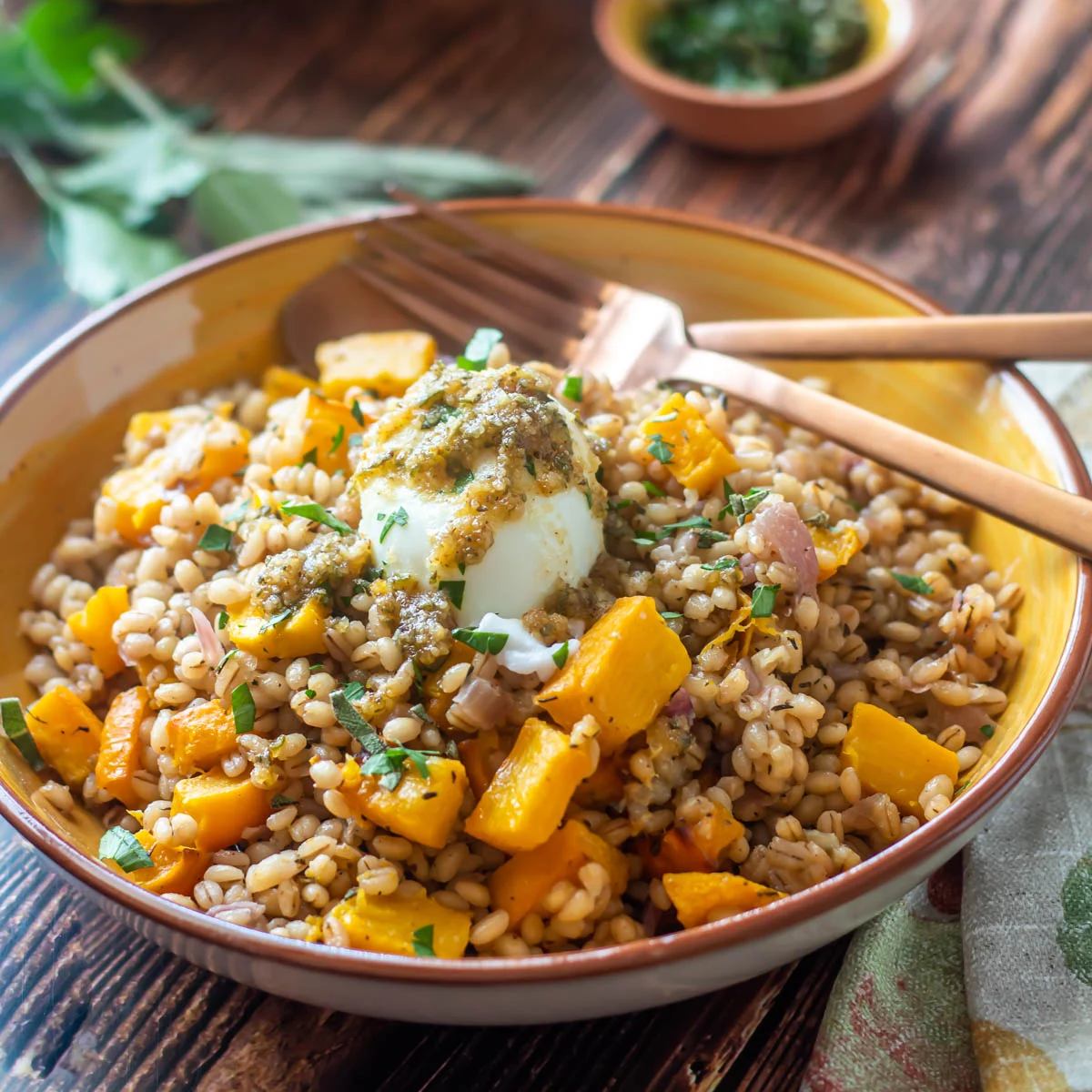
Creamy, comforting and ready in about an hour. This butternut and barley risotto gives you all the richness of classic risotto without the constant stirring marathon. Swap arborio rice for pearl barley, add sweet roasted squash, and dinner basically makes itself.
I made this on a rainy Sunday when I had zero energy but wanted something that tasted like effort. Thirty minutes later, my kitchen smelled like sage and brown butter. My partner asked for seconds before finishing the first bowl. That’s how I knew it was a keeper.
Let me walk you through everything about this butternut and barley risotto recipe, the nutrition, and the variations that keep it interesting all season long.
Why You’ll Love This Butternut and Barley Risotto
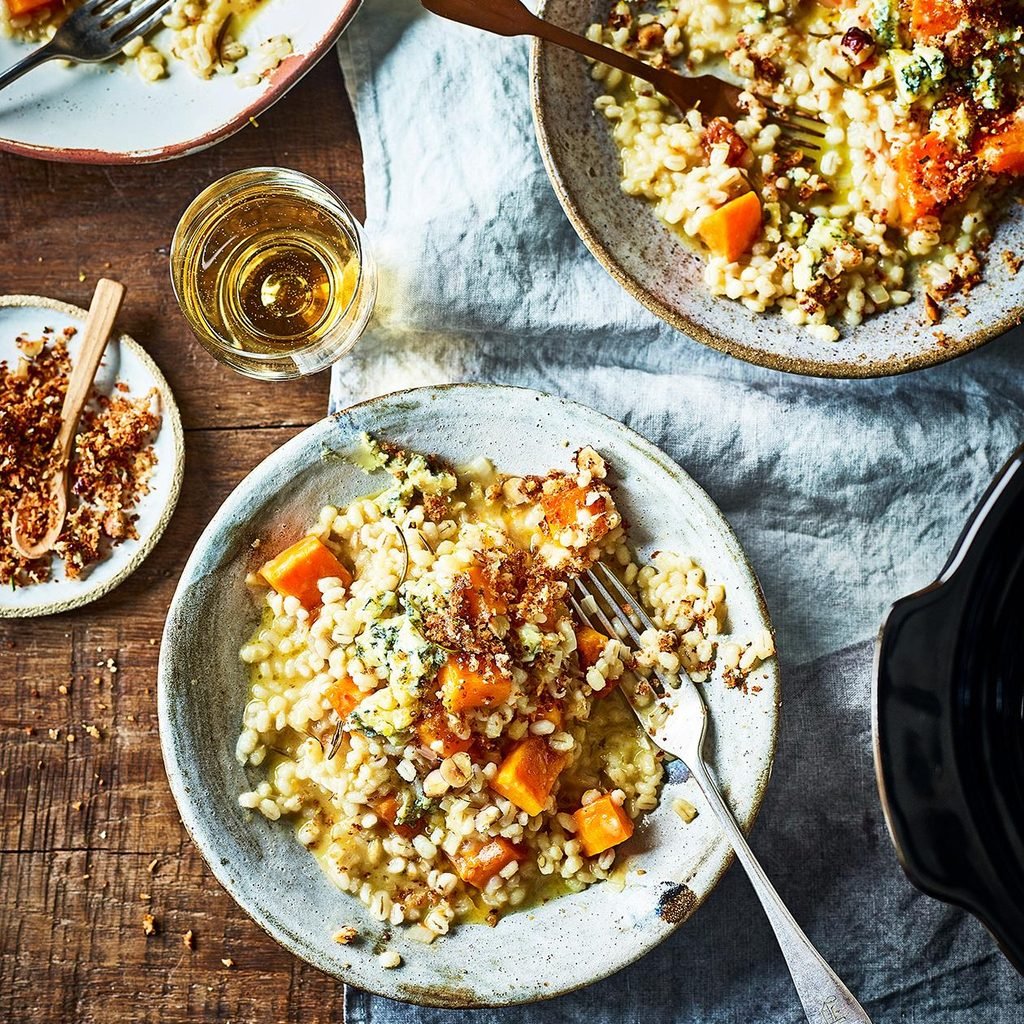
If you’ve ever stood at the stove stirring rice for 45 minutes, you know the pain. Barley changes the game completely.
It’s Forgiving
Arborio rice punishes you for looking away. Barley doesn’t. It holds its shape, stays pleasantly chewy, and absorbs flavor slowly. Walk away for five minutes? Your dish is fine. Burnt edges? Not here.
It’s Better for You
Barley brings about 10 grams of fiber per serving to this dish. That’s a lot for a comfort meal. It also keeps you full longer, so you’re less likely to reach for a second slice of garlic bread. Okay, maybe just one slice.
It Feeds a Crowd Cheaply
Pearl barley is one of the cheapest grains in the supermarket. A pound costs very little and stretches into four generous servings. Pair that with an affordable squash and you have a weeknight dinner that won’t wreck your grocery budget.
Ingredients For This Butternut and Barley Risotto
For the base:
- 1 tablespoon olive oil
- 2 tablespoons butter, divided
- 1 medium yellow onion, finely diced
- 3 garlic cloves, minced
- 1 cup pearl barley, rinsed
- ½ cup dry white wine (or extra broth for alcohol-free)
- 4 cups warm vegetable or chicken broth
- 1 teaspoon fresh thyme leaves, plus more to finish
For the squash:
- 3 cups butternut squash, peeled and cut into ¾-inch cubes
- 1 tablespoon olive oil
- Salt and black pepper
- 6–8 fresh sage leaves
To finish:
- ⅓ cup grated Parmesan, plus more for topping
- 2 tablespoons butter
- Freshly cracked black pepper
- Toaster-oven breadcrumbs (optional, for crunch)
Step-by-Step Instructions
Step 1: Roast the Squash
Heat your oven to 425°F (220°C). Toss the squash cubes with 1 tablespoon olive oil, salt, and pepper. Spread them on a sheet pan in a single layer. Roast for 22–25 minutes until the edges turn golden and a fork slides in easily.
Roasting instead of boiling concentrates the sweetness. That caramelization is where most of the flavor lives. Don’t skip it.
While the squash roasts, tear your sage leaves and fry them gently in a little butter until crisp. Set them aside on paper towels. They’ll become your garnish.
Step 2: Build the Flavor Base
Warm your broth in a small saucepan on low heat. Keep it simmering. Cold broth dropped into hot barley slows everything down and gives you uneven texture. Trust me on this one.
In a large, heavy-bottomed pot or Dutch oven, melt 1 tablespoon butter with 1 tablespoon olive oil over medium heat. Add the diced onion and a pinch of salt. Cook for 5–6 minutes until soft and translucent, not browned.
Stir in the garlic and thyme. Cook for 60 seconds until fragrant. You want to smell it before you taste it.
Step 3: Toast the Barley
Add the rinsed barley to the pot. Stir it around in the butter for 2 minutes. This toasting step adds a subtle nutty depth that plain boiled barley never gets.
Pour in the white wine. Scrape up any bits stuck to the bottom of the pot. Let it bubble and reduce until nearly gone, about 2–3 minutes. The alcohol cooks off. What’s left is brightness that cuts through the richness.
Step 4: Simmer Low and Slow
Add one ladle of warm broth to the barley. Stir gently. Once mostly absorbed, add another ladle. Repeat this every 4–5 minutes.
Unlike rice risotto, you don’t need to stir constantly. Check every few minutes, give it a lazy stir, and add broth as needed. Total simmering time is 30–35 minutes.
The barley is done when it’s tender but still has a slight bite. Think al dente pasta, not mushy porridge. Taste it around the 30-minute mark. If it feels chalky, keep going.
Step 5: Fold It All Together
Turn off the heat. Add the roasted squash, half the Parmesan, and 2 tablespoons cold butter. Stir gently so the squash mostly holds its shape. A few pieces will break down and create natural creaminess. That’s exactly what you want.
Season with salt and plenty of black pepper. If the mixture looks thick, loosen it with a splash of broth. Good risotto should flow slightly when you tilt the plate. Chefs call this “all’onda,” or wavy. It shouldn’t stand up like cement.
Serve immediately in warmed bowls. Top each with remaining Parmesan, crispy sage, and a crack of pepper. This butternut and barley risotto will leave the family asking for seconds.
Nutritional Value Per Serving
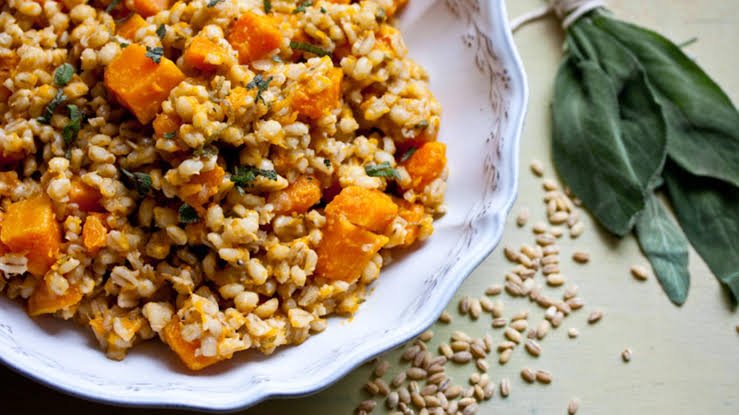
One serving (about 1¼ cups) provides approximately:
| Nutrient | Amount |
|---|---|
| Calories | 380–400 kcal |
| Carbohydrates | 55 g |
| Protein | 13 g |
| Fat | 13 g |
| Saturated Fat | 5 g |
| Fiber | 10 g |
| Sugar | 8 g |
| Sodium | 500 mg |
| Vitamin A | Over 400% DV |
| Vitamin C | 50% DV |
Values are estimates based on standard ingredients and vary by brand and portion size. This nutritional value for this butternut and barley risotto recipe is only a guideline.
What Stands Out About This Butternut and Barley Risotto
The fiber number deserves attention. Ten grams covers roughly 40% of your daily needs in a single bowl. Most people fall short on fiber, so a dinner that quietly fixes that is a win.
The vitamin A content comes from the squash and supports eye health and immune function. The B vitamins and selenium come from the barley. This isn’t just empty comfort food. It genuinely nourishes you.
Want it lighter? Cut the finishing butter, use nutritional yeast instead of Parmesan, and swap chicken broth for low-sodium vegetable broth. You’ll shave off about 60 calories and 7 grams of fat per serving.
Variations On This Butternut and Barley Risotto
Make this once, then make it yours. Here are six directions worth exploring.
Creamy Coconut Version
Replace half the broth with light coconut milk. Add a teaspoon of curry powder with the garlic. Finish with lime zest and cilantro. The squash’s sweetness pairs beautifully with coconut, and the whole thing turns Thai-inspired.
Mushroom and Sage
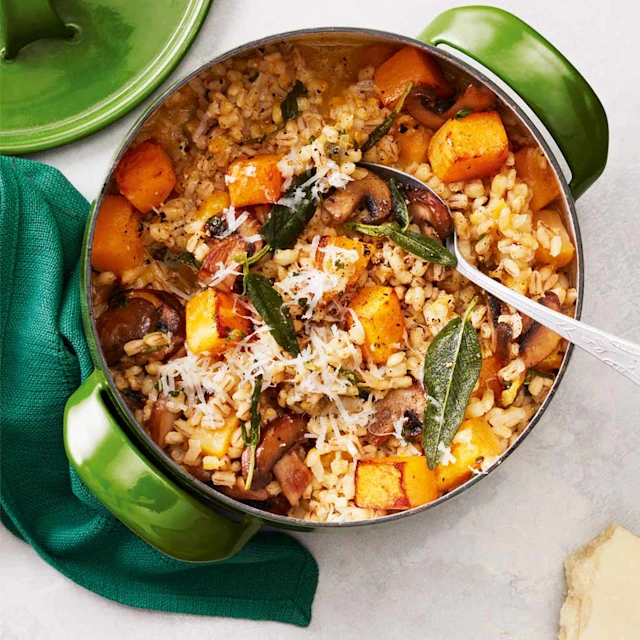
Sauté 8 ounces of sliced cremini or shiitake mushrooms in butter until deeply browned. Fold them in with the squash. Mushrooms bring umami that makes even meat-eaters satisfied. This is the version I make most often.
Spicy Calabrian Twist
Stir in 1–2 teaspoons of Calabrian chili paste with the garlic. Top with toasted walnuts and extra Pecorino Romano instead of Parmesan. Heat plus sweet squash plus salty cheese is an unbeatable combination.
Protein Boost
Add 1 cup of cooked chickpeas or white cannellini beans during the last 5 minutes of cooking. Or top each bowl with a poached egg. The runny yolk acts like extra sauce. For non-vegetarians, crumbled Italian sausage browned separately works wonderfully.
Gluten-Free Adaptation
Traditional barley contains gluten. For a gluten-free version, substitute short-grain brown rice or sorghum. Cooking times stay similar, though sorghum takes closer to 40 minutes. The texture won’t be identical, but the method translates perfectly.
Leftover Fried Rice Style
Chill leftover risotto overnight until firm. Next day, press spoonfuls into a hot buttered skillet and fry until the bottoms go golden and crisp. Serve with a fried egg on top. Honestly, this might beat the original.
Storage and Reheating Tips
Store cooled leftovers in an airtight container in the refrigerator for up to 4 days. Barley holds up better than rice in the fridge, so no sad, dry clumps waiting for you.
Reheat gently in a saucepan over low heat with 2–3 tablespoons of broth or water. Stir often. Microwaving works too if you add a splash of liquid and cover loosely. Never reheat on high power or the squash turns gluey.
Can you freeze it? Yes, for up to 2 months. Thaw overnight in the fridge, then reheat with extra broth. The texture softens slightly, so plan for a creamier result.
Pro Tips for the Best Results
- Rinse your barley well. Dust and loose starch cause gumminess. Rinse under cool water until it runs clear.
- Cut squash evenly. Uniform ¾-inch cubes cook at the same rate. Uneven chunks mean some are mush while others stay hard.
- Don’t salt early and heavily. Broth already contains sodium. Season at the end, then adjust.
- Warm your plates. Risotto cools fast. Run hot water in the bowls, dry them, then serve. Small detail, big difference.
- Parmesan rind trick. Drop a rind into the simmering pot. Remove it before serving. Free flavor upgrade.
Frequently Asked Questions
Is barley risotto the same as regular risotto?
No, but it delivers the same satisfaction. Barley takes longer to cook and has a chewier bite. It’s also higher in fiber and lower on the glycemic index.
Do I have to use wine?
Not at all. Use an equal amount of broth plus a squeeze of lemon juice at the end. You lose a little acidity, nothing more.
Can I use canned or pre-cooked barley?
Yes. Canned barley cuts cooking time to about 15 minutes total. Reduce broth accordingly since the grain is already hydrated.
What squash works best?
Butternut is ideal for its sweet, dense flesh. Delicata, acorn, or kabocha all work too. Just adjust roasting time based on thickness.
Final Thoughts
This butternut and barley risotto earns a permanent spot in your autumn rotation. It’s cheap, healthy, flexible, and tastes like you spent hours when you really spent one. Make a double batch on Sunday and thank yourself on Wednesday.
Now go find the best-looking squash at your market and get cooking. And if you try the leftover fried version, you’ll understand why I warned you about it.
Did you make this recipe?
Leave a comment below and share your experience.
Leave a Reply