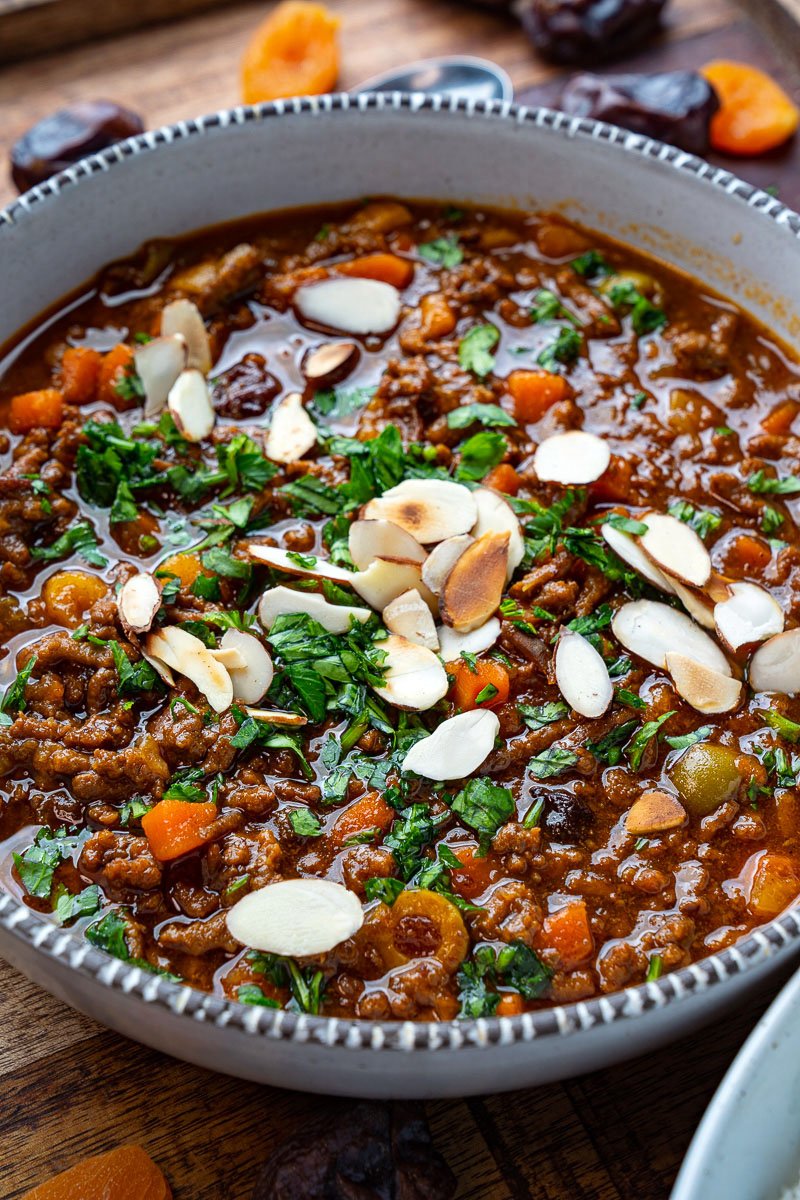
Prep time: 20 minutes Serving size: 4 generous portions
Cooking time: 1 hour 40 minutes Difficulty: Easy
Total time: 2 hours
Best pot: Clay tagine, Dutch oven, or heavy lidded casserole
There are dinners that feed you and then there are dinners that hug you. This Moroccan beef tagine is the dinner that hugs you. It is slow, fragrant, and forgiving. You add everything to one pot and then you walk away. Your kitchen fills with warm spice. An hour and a half later, you have fork tender beef in a glossy sauce.
If you have never cooked a Moroccan beef tagine before, start here. This recipe is user friendly for beginners and it is flexible. It is also the kind of dish that makes people close their eyes on the first bite.
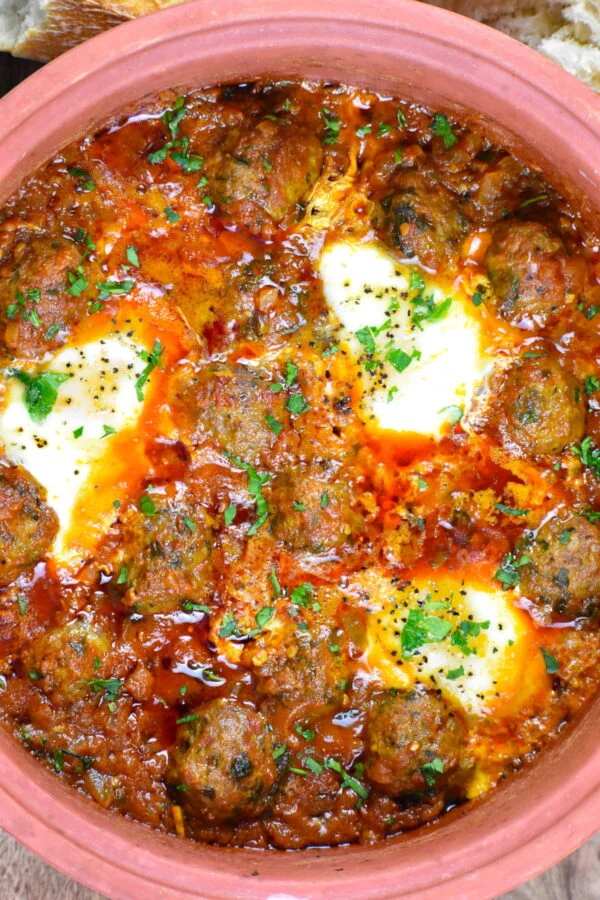
What Exactly Is a Moroccan Beef Tagine?
A tagine is two things at once. It is a dish and it is also the pot the dish is cooked in. The pot is made of clay. It has a wide, shallow base and a tall cone shaped lid. That cone is the magic trick. It where the steam rises and it hits the cool lid. The steam condenses and then it drips back down onto the meat. Nothing escapes the pot and the lavor stays inside.
The result is a stew that tastes far more complex than the short ingredient list suggests. For this version of the moroccan beef tagine we use beef chunks. We pair it with warm spices, onions, and a little sweetness from prunes or dried apricots. That sweet and savory balance is the soul of Moroccan cooking.
Why This Recipe Works for Busy Cooks
Most of the time cooking Moroccan beef tagine it is hands off. You brown, you stir once, you simmer. There is no babysitting and it scales up easily for guests. Leftovers taste even better the next day and it freezes beautifully.
Ingredients
For the beef and base
- 2 lb (about 900 g) beef chuck, cut into 1 and a half inch cubes
- 2 large yellow onions, sliced thin
- 3 tablespoons olive oil
- 2 tablespoons water
- 1 teaspoon salt, or to taste
- Half a teaspoon black pepper
For the spice blend
- 2 teaspoons ground ginger
- 1 and a half teaspoons ground cinnamon, divided
- 1 teaspoon ground turmeric
- 1 teaspoon ground cumin
- Half a teaspoon ras el hanout, if you have it
- A small pinch of saffron threads, crushed
For the sweet finish
- 1 cup pitted prunes, or dried apricots
- 2 tablespoons honey
- Half a cup blanched almonds
- 1 tablespoon sesame seeds
- Fresh cilantro or parsley, to garnish
For serving
- Crusty bread, or steamed couscous
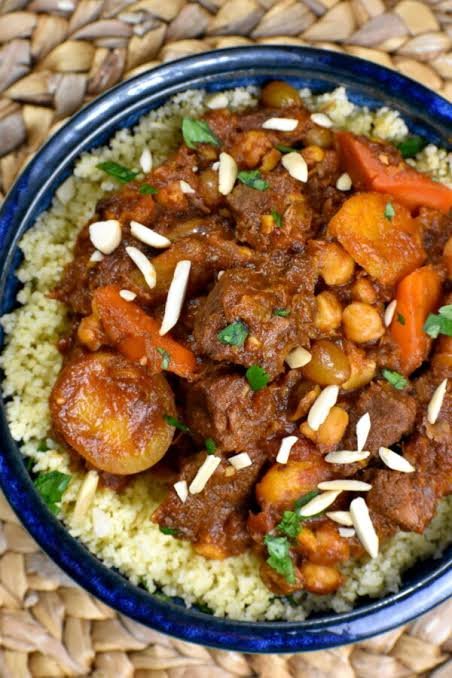
Step by Step Instructions
Step 1: Build the aromatic base
Warm the olive oil in your tagine or pot over medium heat. Add the sliced onions and a pinch of salt. Cook them slowly for about 10 minutes. You want them soft and golden, not browned hard. This sweet onion base thickens the sauce later.
Step 2: Add the beef and spices
Push the onions to the edges. Nestle the beef cubes into the center. Sprinkle over all the spices. Add the crushed saffron. Pour in the water. Stir gently so every piece of meat gets coated.
Step 3: The first simmer
Raise the heat a little. Let the pot bubble for 10 minutes with the lid off. This builds depth. Then add hot water until it reaches about halfway up the meat. Cover with the lid.
Step 4: The long, slow braise
Turn the heat down to low. Let it simmer gently for 80 to 90 minutes. Check it once halfway through. If it looks dry, add a splash of hot water. The beef is ready when a fork slides in with no resistance.
Step 5: Toast the almonds
While the beef cooks, warm a dry pan over medium heat. Add the almonds. Stir them constantly for 3 to 5 minutes until golden. Watch closely. Nuts burn fast. Set them aside to cool.
Step 6: Finish with sweetness
About 15 minutes before the beef is done, stir in the prunes and honey. Sprinkle in the remaining cinnamon. This is the moment your sauce turns glossy and the aroma turns irresistible. If you like a thicker sauce, lift the lid for the last 10 minutes.
Step 7: Garnish and serve
Scatter the toasted almonds over the top. Add sesame seeds and a handful of fresh herbs. Bring the whole pot to the table if you can. Serve with bread or couscous.
Tips for the Best Moroccan Beef Tagine
Pick the right cut of beef for the Moroccan beef tangine, makes a huge difference. Chunky beef cuts is your best friend. It has connective tissue that melts during long cooking. Lean cuts turn dry and stringy.
Do not skip the onion time. Caramelizing the onions slowly is what gives the gravy body. There are no thickeners in this recipe. The onions do that job.
Bloom your saffron. Crush the threads into a teaspoon of warm water and let it sit for 10 minutes. This releases color and perfume that dry saffron never gives up.
Keep the heat low. A rolling boil toughens beef. You want a lazy, sleepy bubble. Adjust as you go. Taste near the end. Need more salt? Add it. Want more warmth? Add cinnamon. Want brightness? A tiny squeeze of lemon wakes everything up.
No Tagine Pot? No Problem
Use a Dutch oven. The method is identical. A heavy lidded casserole works too. The clay pot is lovely, but it is not required for great flavor for this Moroccan beef tagine.
Serving Ideas and Pairings
Bread is the classic choice and the torn crusty bread scoops up every bit of sauce. Couscous is the second best classic, and it turns the Moroccan beef tagine into a full celebration plate.
For drinks, go with a chilled rosé, a light red like a Cinsault, or a mint tea if you want to stay true to Morocco. A simple green salad with lemon dressing cuts the richness nicely of this Moroccan beef tagine.
Storage, Reheating and Freezing
Keep leftovers in a sealed container in the fridge for up to 4 days. Honestly, day two is often better. The spices keep mingling overnight.
Reheat gently on the stove with a splash of water. The sauce thickens when cold, so loosening it is normal.
To freeze, cool completely, then pack into a freezer bag for up to 3 months. Thaw overnight in the fridge before reheating.
Nutritional Value
Per serving, about one quarter of the recipe:
- Calories: 480
- Protein: 38 g
- Carbohydrates: 34 g
- Total fat: 22 g
- Saturated fat: 5 g
- Fiber: 5 g
- Sugar: 20 g, mostly from fruit and honey
- Sodium: 620 mg
- Iron: 6 mg
This is a hearty, protein forward meal. The prunes and almonds add fiber and healthy fats. If you want to lighten it, trim visible fat from the beef and use 1 tablespoon of olive oil. Serving over cauliflower rice instead of couscous also drops the carbs.
Common Mistakes to Avoid
Adding too much water. A tagine sauce should be thick and spoon coating, not soupy. Start with less liquid. You can always add more.
Rushing the braise. Undercooked beef is chewy. Give it the full time.
Adding the fruit too early. Prunes dissolve into mush if they simmer for two hours. Fifteen minutes is plenty.
Forgetting to taste. Every beef batch and every spice jar is different. Your spoon is your best tool.
Fun Variations to Try
Vegetable lovers: swap the beef for chickpeas, carrots, and butternut squash. Use vegetable stock and keep the same spices.
Lemon and olive: skip the prunes. Add preserved lemon rind and green olives in the last 20 minutes. This version is tangy and salty in the best way.
Extra heat: stir in half a teaspoon of harissa with the spices.
Weeknight shortcut: use a pressure cooker. It cuts the braise to about 35 minutes.
The Cultural Journey of Tagine Cuisine
The art of cooking tagine stretches back over a thousand years. Berber communities in North Africa developed this method out of necessity. They had tough cuts of meat and limited resources. The tagine pot solved both problems. It made everything tender and it saved fuel.
Moroccan cuisine blends are influences from across the Mediterranean and Arab traders who brought spices. The Ottoman Empire influenced techniques. Jewish communities added their own touches. The result is a cuisine that feels both ancient and constantly evolving.
Tagine dishes vary by region. Coastal towns favor fish and seafood. The Atlas Mountains offer lamb and goat. Cities like Fes and Marrakech are famous for meat and fruit combinations. The sweet and savory pairing you see in this recipe is a hallmark of urban Moroccan cooking.
The Spice Blends That Define Moroccan Flavor
Ras el hanout is often called the king of spices. The name means “head of the shop.” It implies a blend so good it tops the menu. Traditional recipes include 20 to 30 ingredients. Common elements are cumin, coriander, ginger, cinnamon, turmeric, and black pepper. Some versions add cardamom, cloves, or even dried rosebuds.
For this Moroccan beef tagine, you can use store bought ras el hanout. Or you can create your own. Start with equal parts cumin and coriander. Add a bit more ginger. Then include cinnamon, turmeric, and a pinch of heat. Taste and adjust. This is your kitchen. Make it yours.
Saffron is another star. It is expensive, so use it wisely. A small pinch goes a long way. It gives the sauce its signature golden color and a delicate floral perfume. If you do not have saffron, use extra turmeric for color and skip the perfume note. It still works.
Bread and Grain Options for Serving
Crusty bread is the most traditional choice. Look for khobz, the Moroccan round loaf. Or use French or Italian bread. Tear it into pieces and let everyone dip. It is communal and messy. That is the point.
Couscous is the second classic. It takes only five minutes to make. Put the couscous in a bowl. Add boiling water or stock. Cover it. Wait five minutes. Fluff it with a fork. That is it. Serve the tagine over it, or on the side.
Rice is a good modern alternative. Use long grain. It absorbs the sauce well. Quinoa works too. It has a nice texture. Try bulgur for something in between.
Making Moroccan Beef Tagine Special for Occasions
This Moroccan beef tagine shines at celebrations. It is impressive without being fussy and it is easy to make it ahead. You can feed a crowd and it works for casual dinners and special nights alike.
For a festive table, arrange the tagine in the center. Surround it with small bowls of toasted almonds, sesame seeds, fresh herbs, and lemon wedges. Let people add their own garnish.
Serve multiple tagines if you have guests. Offer a vegetarian version alongside the beef. Moroccan chickpea tagine with vegetables and the same spices is a perfect companion.
Final Thoughts
This Moroccan beef tagine is not a fussy recipe pretending to be fancy. It is honest food. Cheap cut of beef, a few spices, some patience. That is the whole secret.
Make it on a slow Sunday. Invite a friend. Let the pot sit in the middle of the table and watch people go back for seconds. That is exactly how it is meant to be eaten.
The beauty of cooking Moroccan beef tagine is, that it teaches you to slow down. You cannot rush it. You have to wait and in that waiting, something magical happens. The kitchen smells incredible.
Your day gets better.
The food tastes like love.
Leave a Reply